

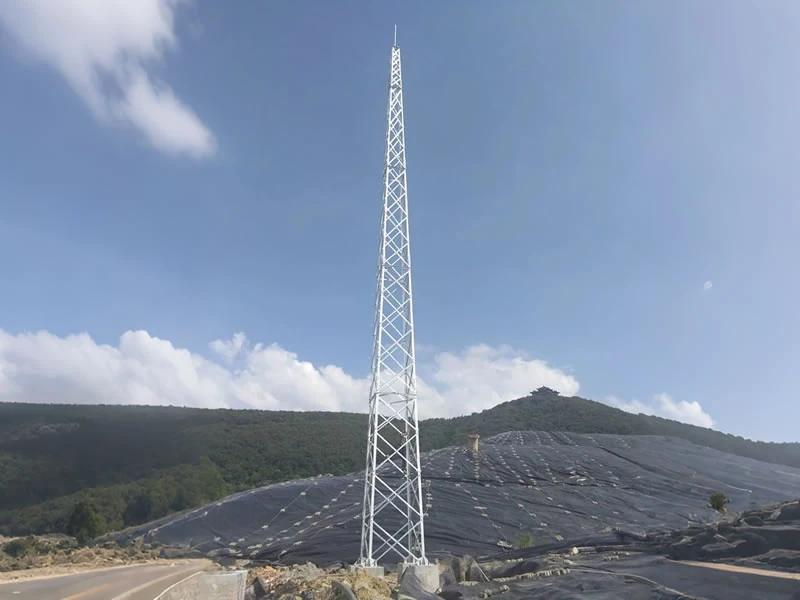
Lattice lightning protection towers carry one or more air terminals above the equipment or structure they protect. Substations, telecom compounds, fuel storage areas, and industrial plants are common sites.
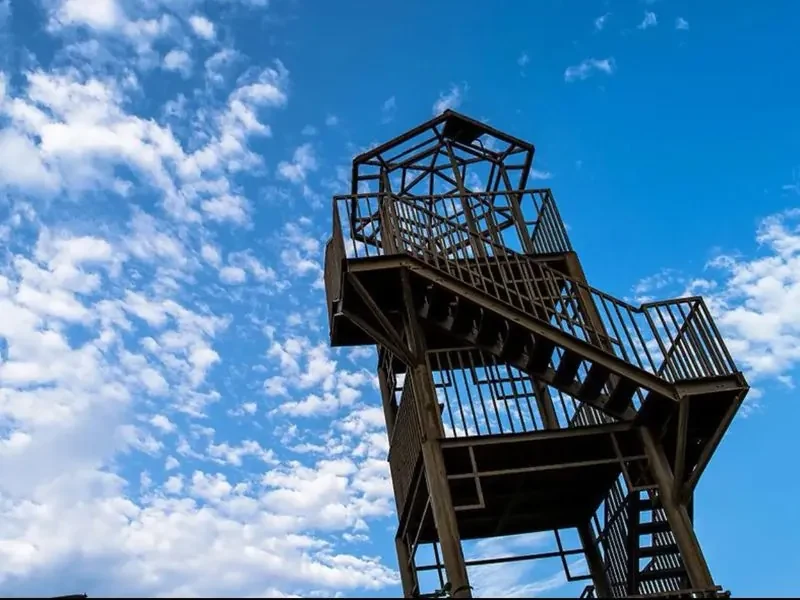
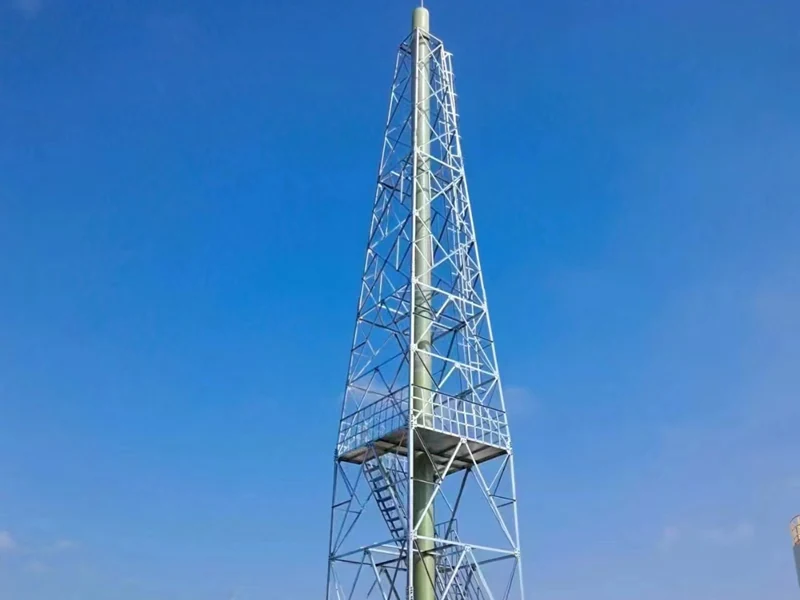
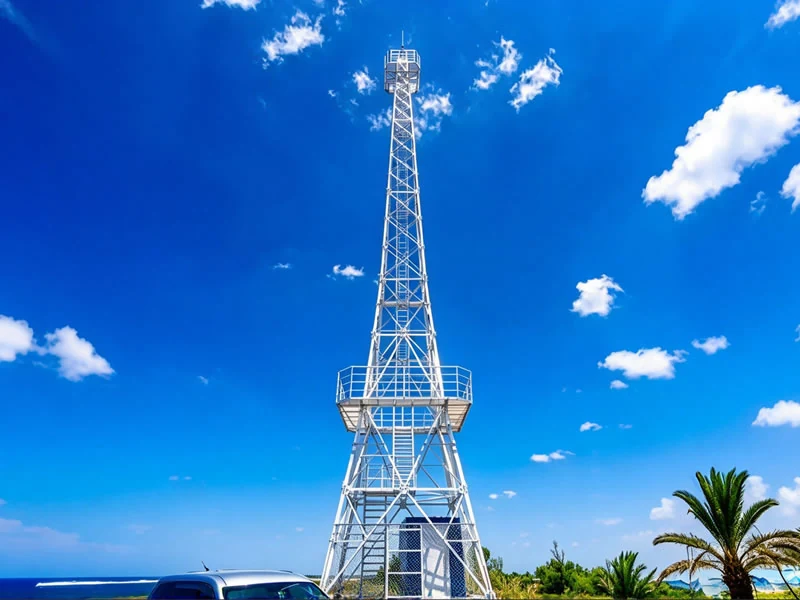
Legs and bracing are usually angle steel. Sections are fabricated and galvanized at the factory, then bolted together on site. A three-leg tower takes less ground space. A four-leg tower works better when height, access, or design loads call for a wider base.
Every tower is sized for the site — protection height, local wind and ice loads, soil data, and the structural code named in the project all come into play. We can supply foundation reactions for your local engineer.
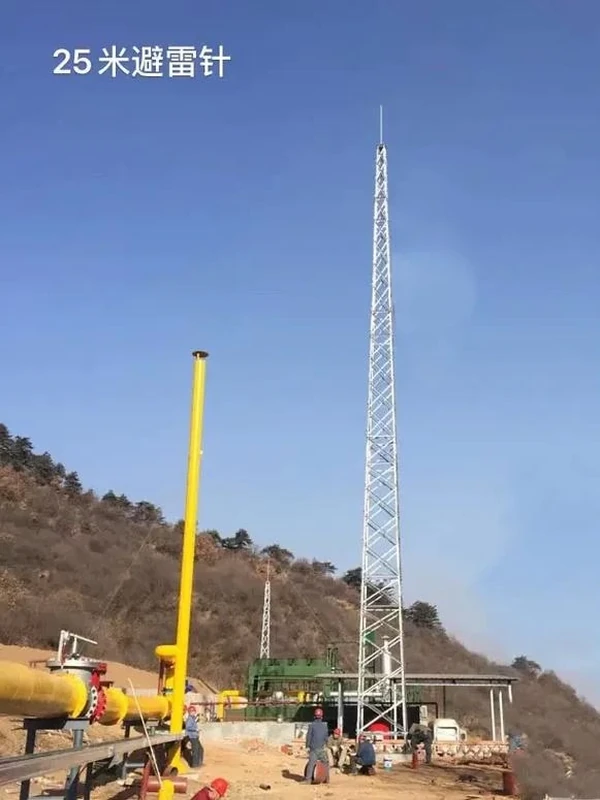
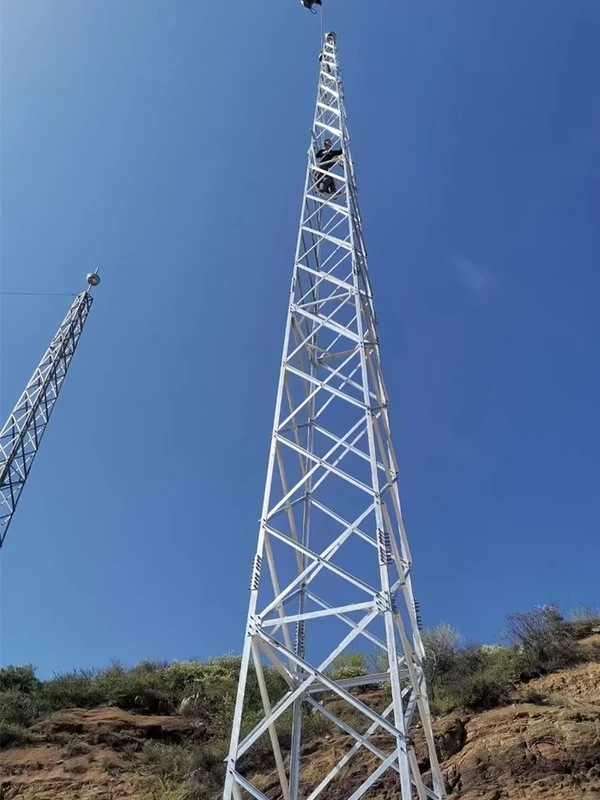
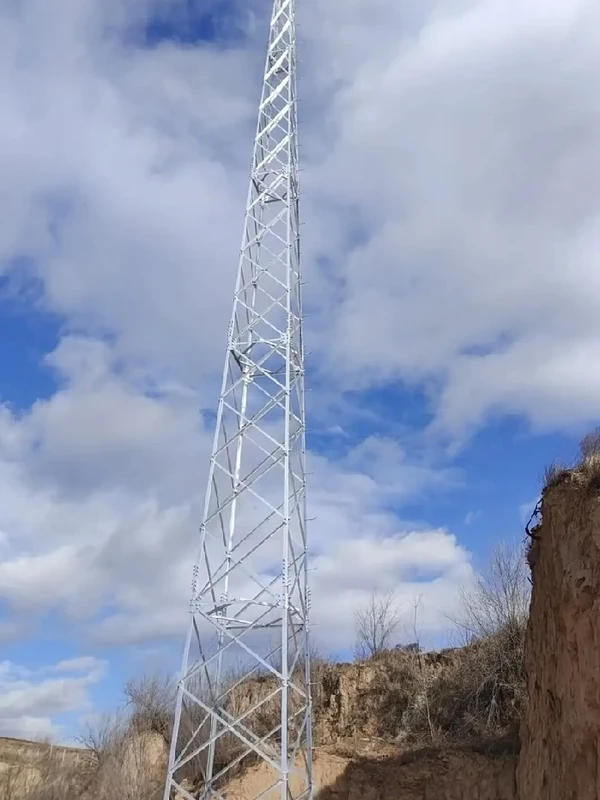
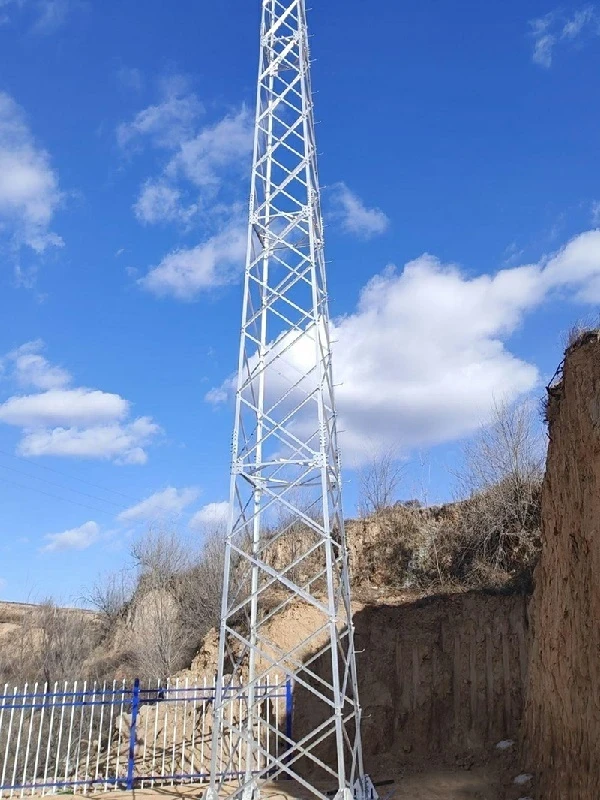
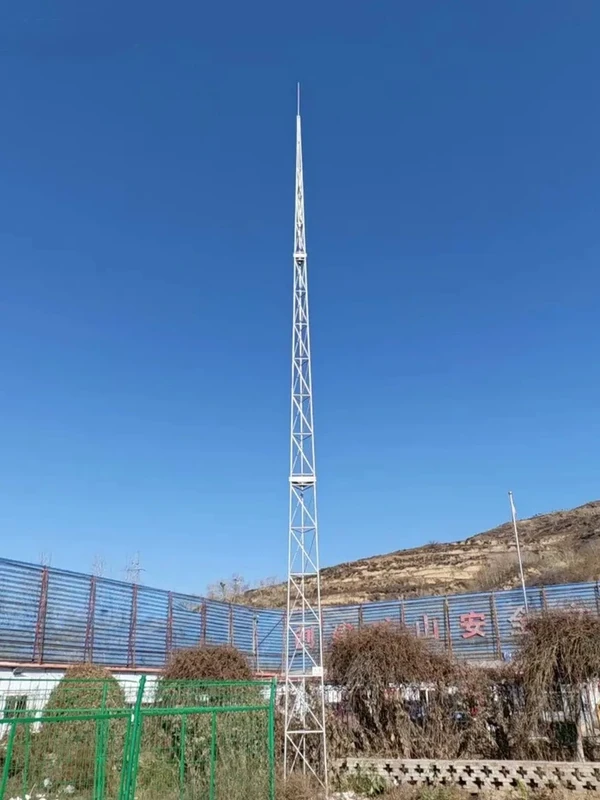
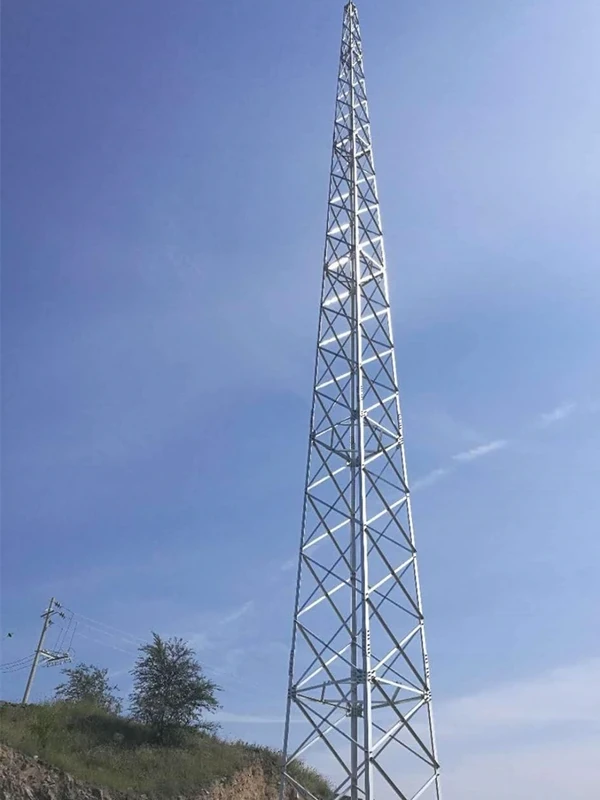
Specifications
| Structure | Self-supporting three-leg or four-leg lattice tower |
| Height range | 15 to 60 m; custom heights reviewed against the project loads |
| Steel | Q235B, Q355B or an approved equivalent; angle sections are normally used for the lattice frame |
| Connections | Bolted splice or flange joints; bolt grade, coating and joint detail to the structural design |
| Air termination | One or more air terminals positioned to the project lightning protection study |
| Design conditions | Wind, seismic action, ice and temperature taken from the project location and governing code |
| Plumb tolerance | Set by the project code; 1/1000 of tower height is a common erection requirement |
| Surface treatment | Fabricated steelwork hot-dip galvanized to ISO 1461:2022, ASTM A123/A123M-24 or the specified local standard |
| Foundation | Individual reinforced concrete footings or a combined foundation based on tower reactions and soil data |
| Grounding provision | Base earthing lug available; grounding grid, bonding and target resistance specified by the electrical designer |
| Standards | IEC 62305-3:2024 for the external lightning protection system when specified; tower structure to the agreed national or project code |
For a quotation, send the site layout, protected-object height, proposed tower position, site wind and ice data, and available soil information. If a lightning study has already been completed, include the protection method, air-terminal layout and grounding criteria.
Applications
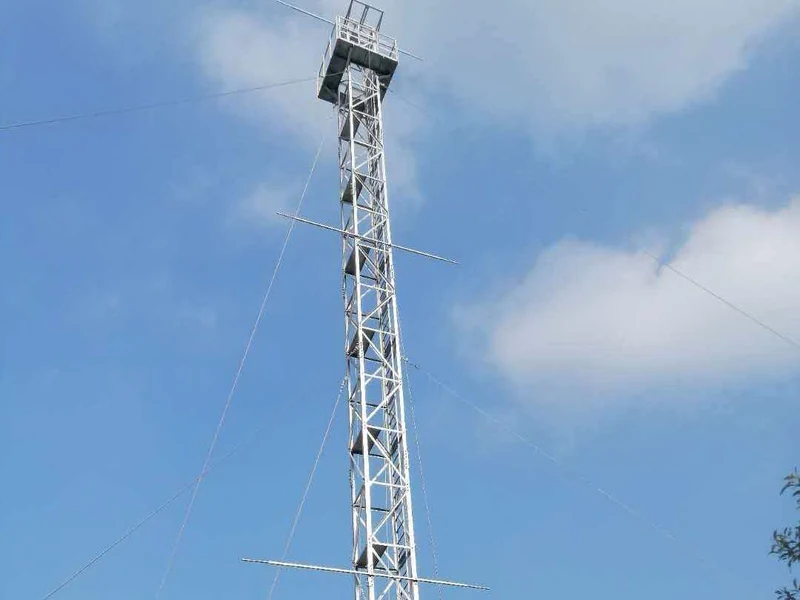
Lattice lightning towers are supplied for telecom and radar stations, airports, substations, power plants, fuel storage sites, chemical facilities and industrial yards. Rooftop installation is also possible after the building engineer has checked the tower reactions, anchorage and load path.

 English
 German
 French
 Portuguese
 Spanish
 Russian
 Arabic
 Indonesian
 Vietnamese