

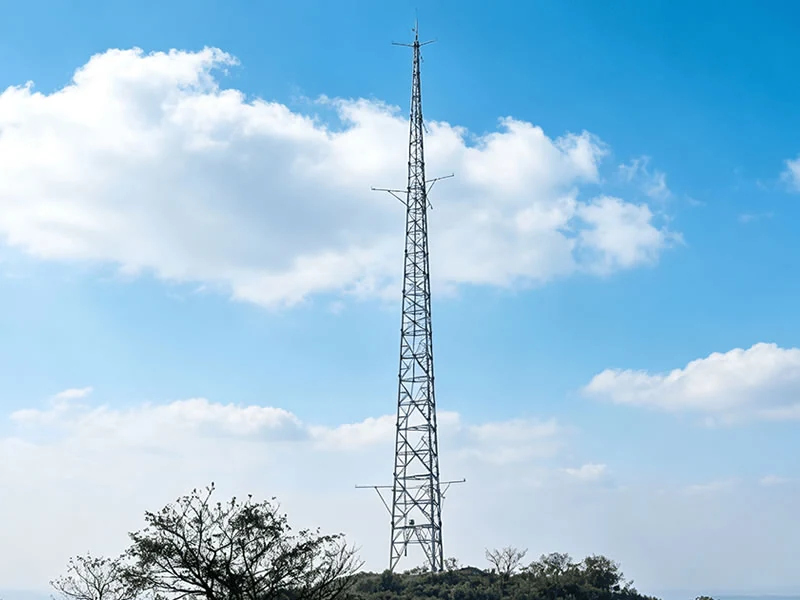
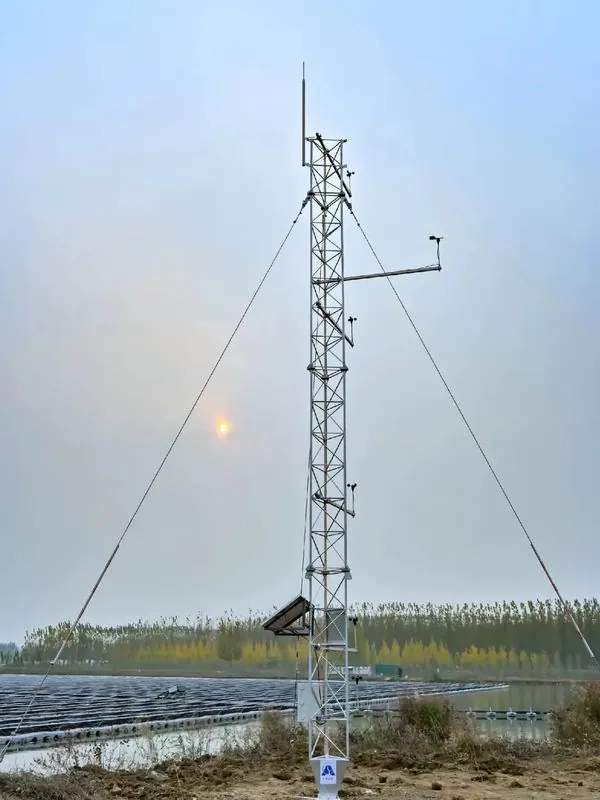
Wind Measurement Tower orders usually begin with a measurement schedule showing each sensor, its height and its boom direction. We use that schedule to prepare the tower and bracket layout. A normal supply includes the mast sections, base, guy wires, anchors, sensor booms, lightning rod and cable clips. The data logger cabinet can be included when it forms part of the order.
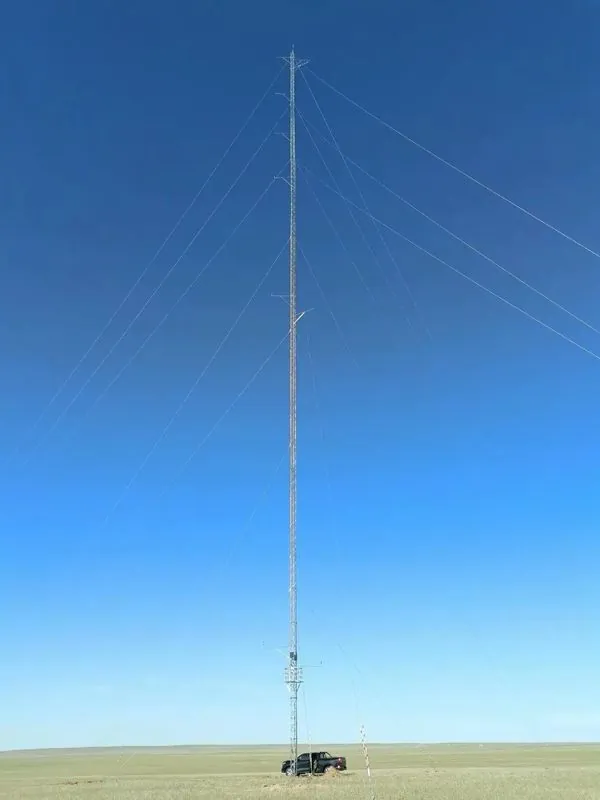
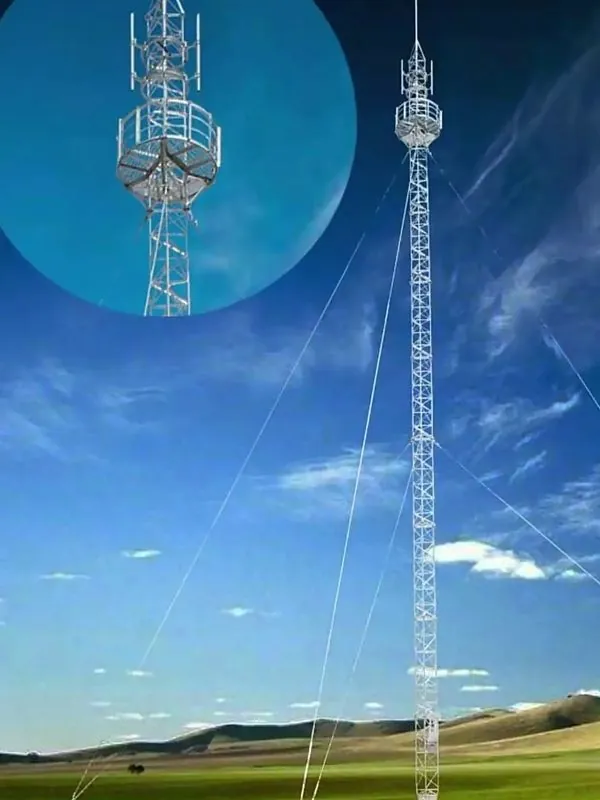
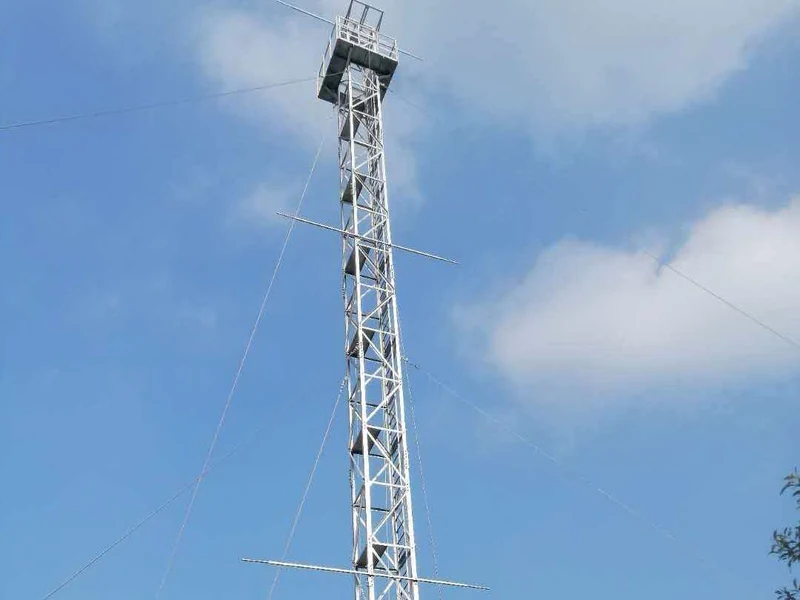
Most open sites use a triangular guyed lattice mast. The sections pack easily for road or container transport, while three sets of guy wires hold the mast in position. Before design starts, the site plan must show enough room for the anchors. Their size and location depend on the soil, ground slope and tower height. A self-supporting lattice tower is an option where guy anchors would interfere with roads, buildings or other equipment.
Boom length, direction and spacing can affect wind readings, so we confirm these details before fabrication. We also need the basic wind speed, ice conditions, terrain category and soil information for the site. These figures are used to calculate the mast, guy wires and anchor foundations as one system.
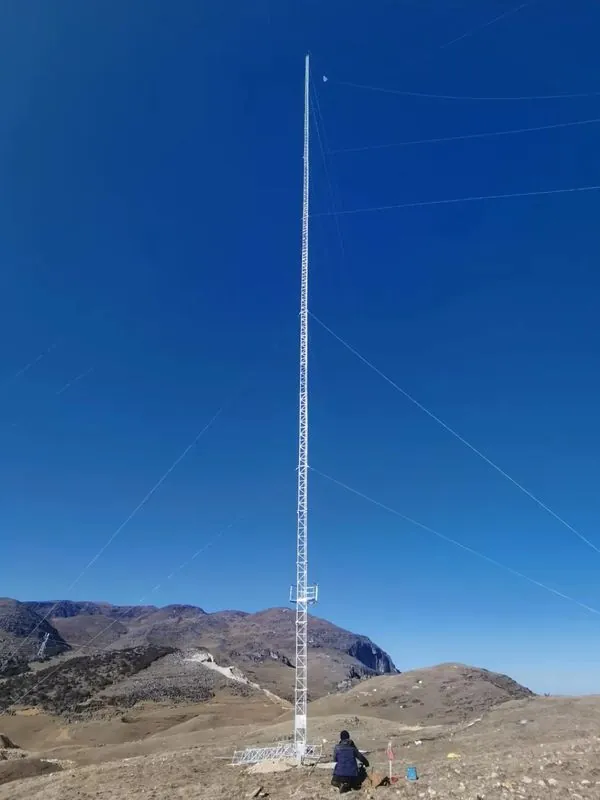
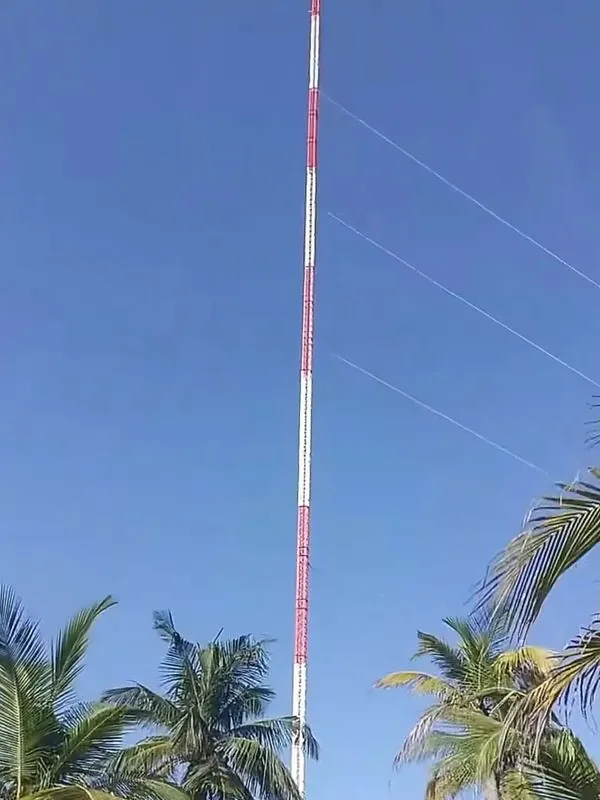
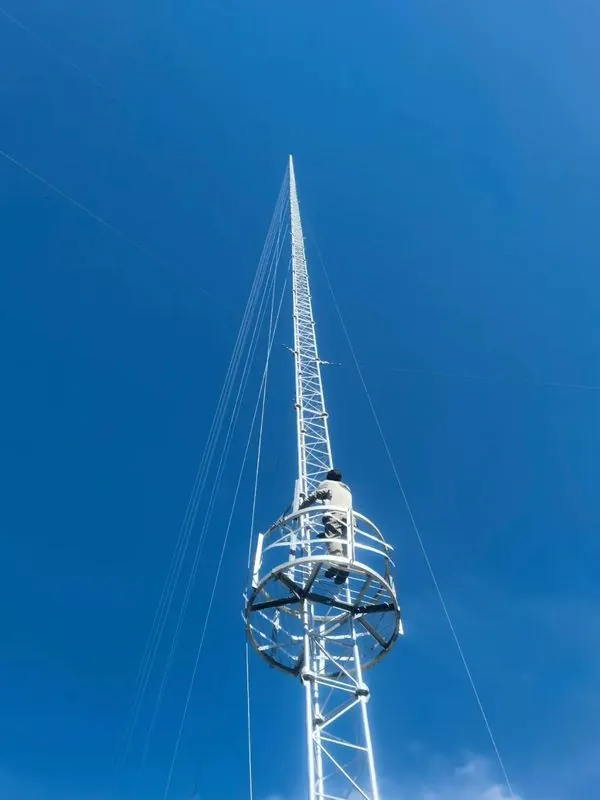
Specifications
| Structure | Triangular guyed lattice mast; self-supporting lattice tower available for restricted sites |
| Common heights | 30, 50, 60, 80, 100 and 120 m; taller towers require project review |
| Main steel | Q235B or Q355B round steel, angle steel or steel tube, selected by calculation |
| Connections | Bolted flange or splice-plate connections for site assembly |
| Guy system | Galvanized steel strand, with guy levels and anchor radius set by structural design |
| Instrument levels | Arranged to the specified measurement heights and sensor schedule |
| Sensor options | Cup or ultrasonic anemometers, wind vanes, temperature, humidity and pressure sensors |
| Data system | Logger, power supply, storage interval and telemetry selected for the monitoring program |
| Design conditions | Wind speed, ice load, terrain, seismic action and soil data taken from the project site |
| Vertical tolerance | Typically not greater than 1/1000 after erection, subject to the project specification |
| Corrosion protection | Hot-dip galvanizing to GB/T 13912 or ISO 1461 when specified |
| Reference standards | Observation system to QX/T 559-2020 when specified; steel structure to GB 50017 or the agreed export project code |
For a quotation, send the site coordinates, tower height, measurement levels, sensor list and available guy radius. Soil information is needed before the anchor and foundation drawings can be finalized.
Applications
Wind measurement towers are installed for wind farm feasibility studies, operating-site checks and long-term weather observation. They are also used on islands, coastal sites and industrial property. Tell us whether the mast is temporary or permanent, since that decision affects the design life, access arrangement and data equipment.

 English
 German
 French
 Portuguese
 Spanish
 Russian
 Arabic
 Indonesian
 Vietnamese