

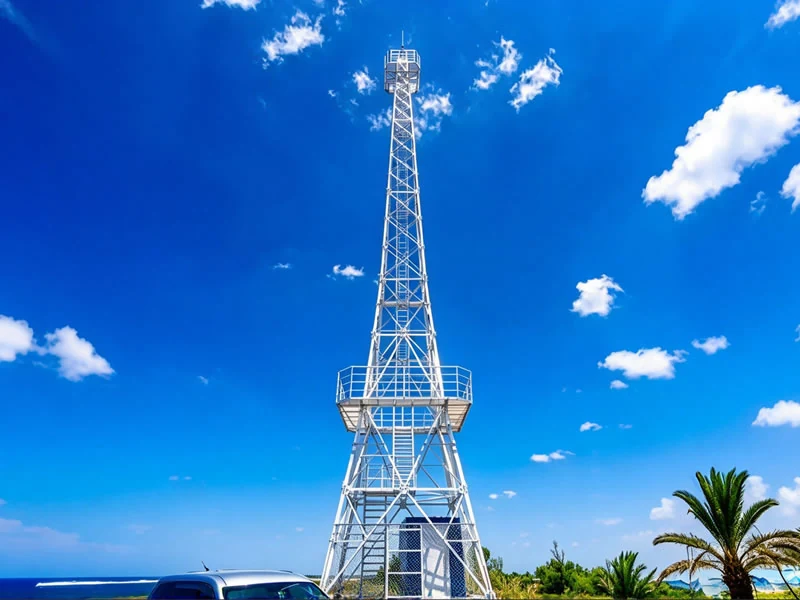
Communication Tower is also called a telecom tower or signal tower. Most enquiries arrive with a required height, but height is not enough for us to design the steelwork. We need to know how many antennas will be fitted, their size, where they sit and whether more equipment may be added later. A single microwave dish and six sector antennas can place very different demands on two towers of the same height.
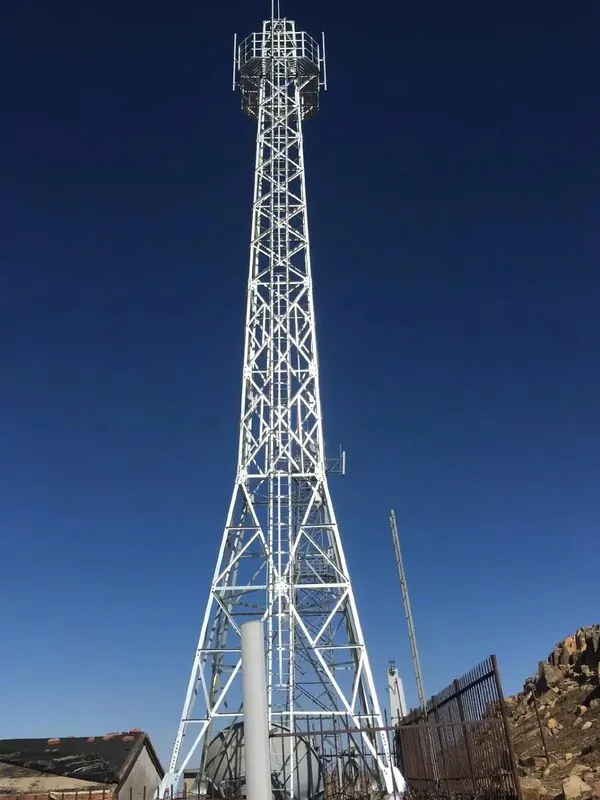
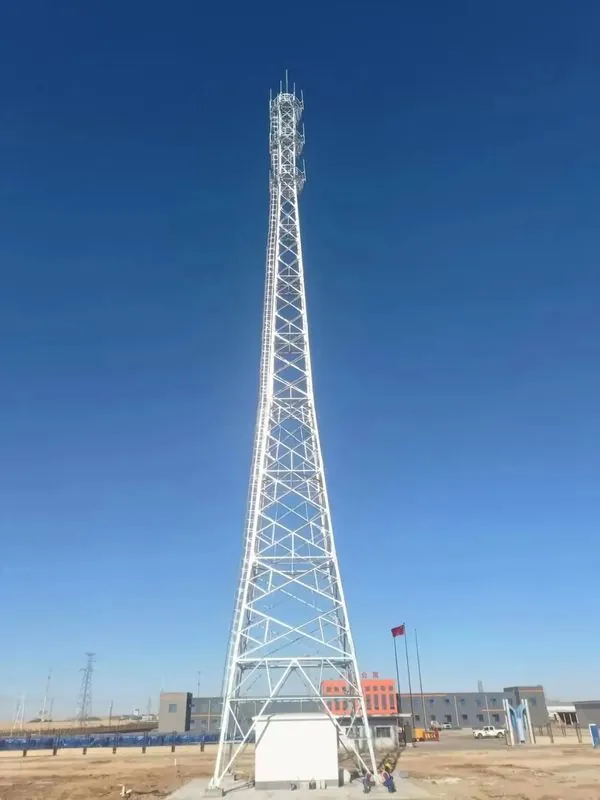
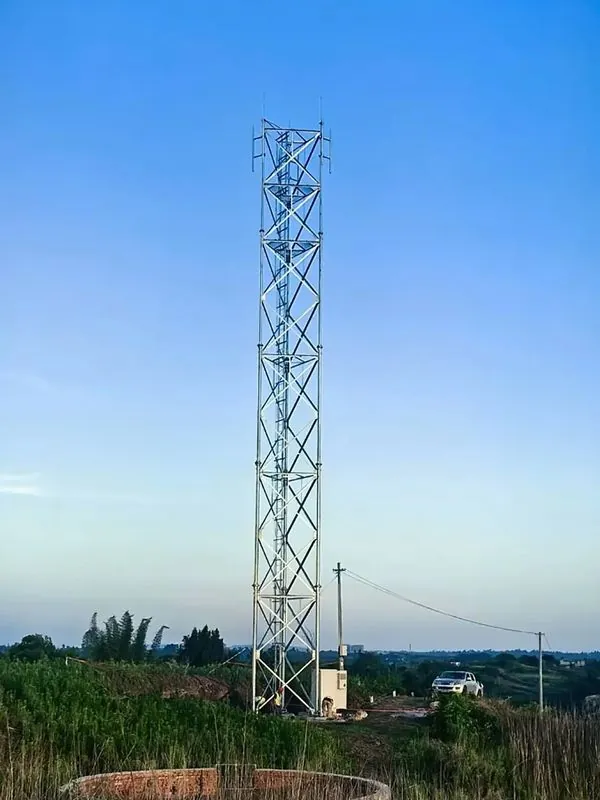
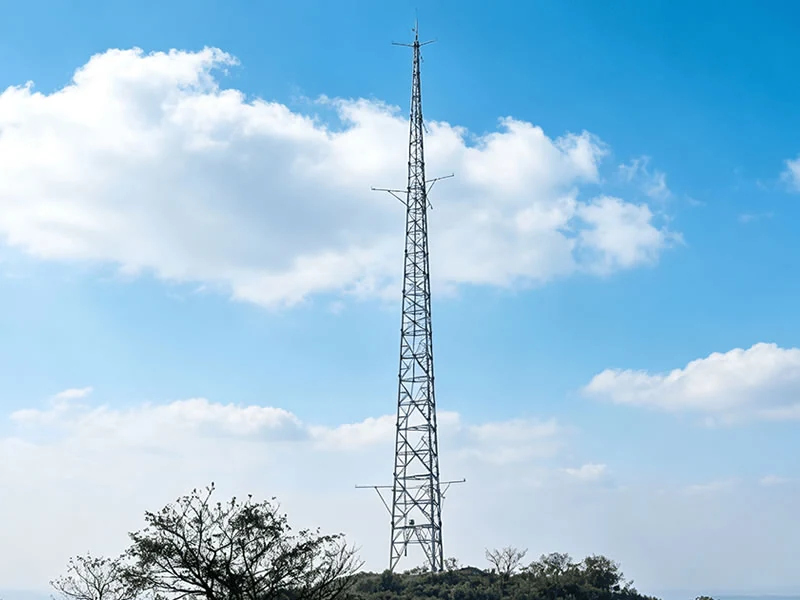
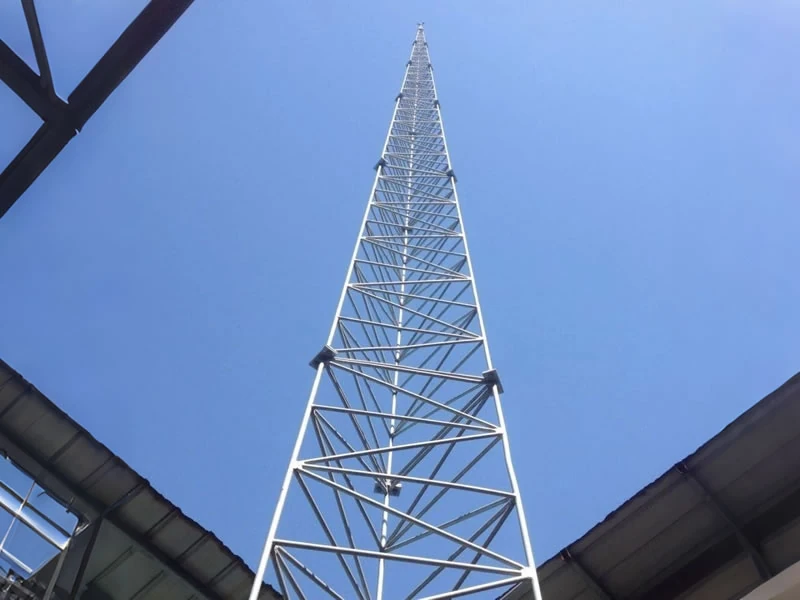
On a clear ground site, we normally start by looking at a four-leg angle steel tower. It is economical and leaves plenty of room for feeders and climbing access. If the compound is narrow, a three-leg or four-leg tubular tower may fit better. A monopole has the smallest footprint, but pulling feeders through the pole and working inside it is less convenient.
A guyed mast may look cheaper because it uses less steel. The saving is less convincing once the three or four anchor areas are included, especially where land is limited. Movement is another concern. We would not select a guyed mast for a microwave link until the permitted twist and deflection have been checked.
What we need before design
An antenna schedule and a simple elevation drawing are the best starting point. From these we can place the platforms, ladder and feeder supports without creating awkward cable routes. The same drawing can show the lightning rod, grounding connection and aviation lights. If future antennas are planned, tell us now. Adding reserve capacity during design is much easier than strengthening a finished tower.
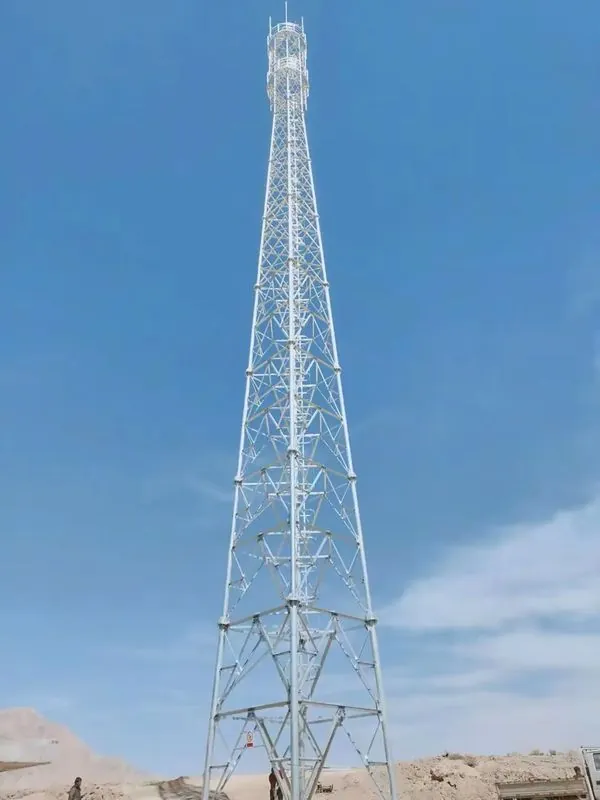
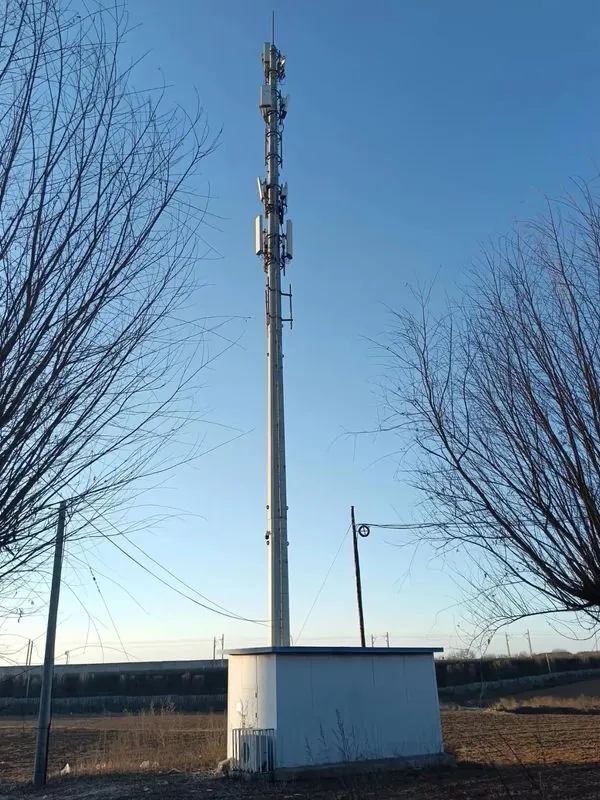
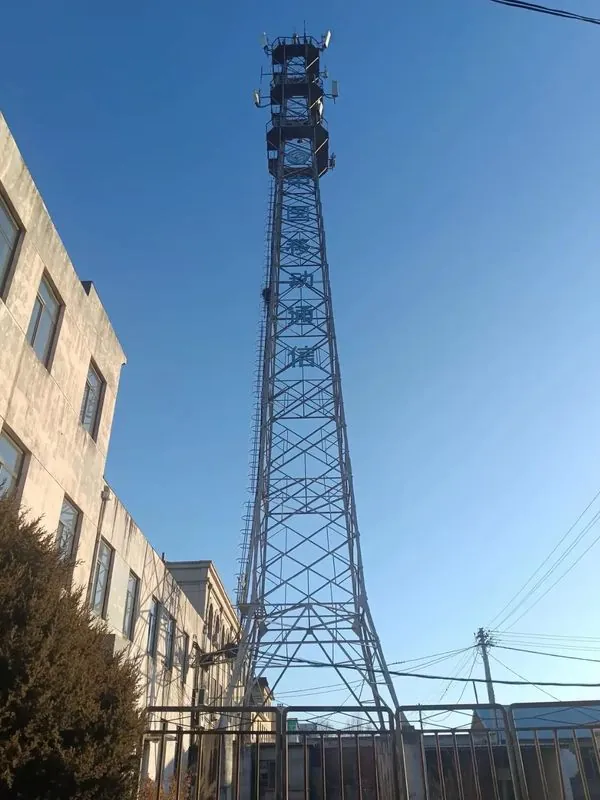
Specifications
| Structure | Angle steel tower, three-leg or four-leg tubular tower, or monopole |
| Common heights | 20, 30, 40, 45, 50, 60 and 70 m; custom heights available |
| Main steel | Q235B, Q355B or Q420 structural steel |
| Design standards | TIA/EIA-222-G/H, YD/T 5131, GB 50017, or EN 1993-3-1 as specified |
| Design wind speed | 28 to 60 m/s; wind pressure 0.4 to 1.2 kN/m² |
| Seismic design | Up to intensity 8 when required |
| Ice thickness | 5 to 20 mm |
| Working temperature | -40°C to +70°C |
| Vertical tolerance | Not greater than 1/1000 |
| Grounding resistance | 4 ohms or less when installed to the grounding design |
| Antenna platforms | Two to five levels; typically 6 to 12 antennas per level, subject to layout |
| Corrosion protection | Hot-dip galvanizing to ISO 1461 when specified |
| Welding | AWS D1.1 or GB 50205 according to the project specification |
| Design service life | 50 years when the specified design, exposure and maintenance conditions are met |
To prepare a quotation, we need the project location, tower height and antenna list. For microwave dishes, include the diameter and mounting height. For sector antennas, mark the quantity and platform levels.
Applications
Communication towers are used for mobile base stations, railway networks, microwave links and radio or television transmission. A rooftop tower may carry the same antennas as a ground tower, but the building connection has to be checked separately from a normal foundation.

 English
 German
 French
 Portuguese
 Spanish
 Russian
 Arabic
 Indonesian
 Vietnamese