

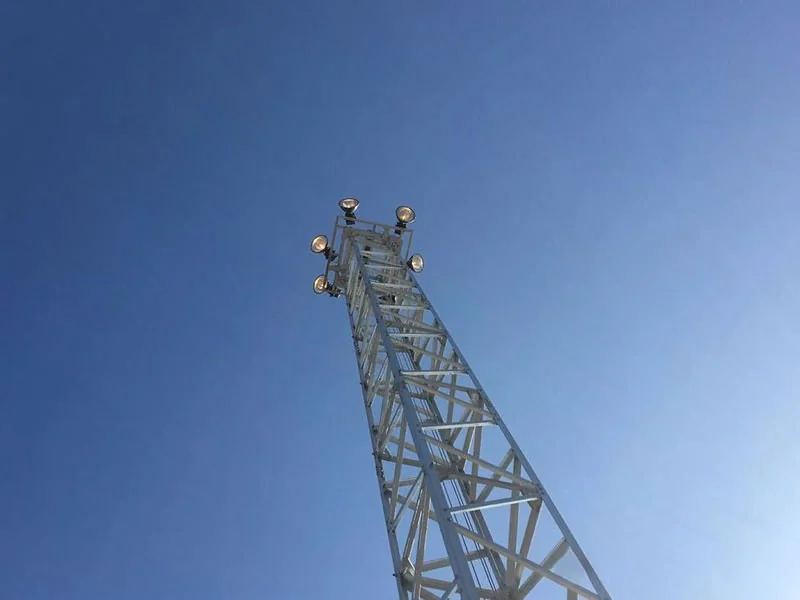
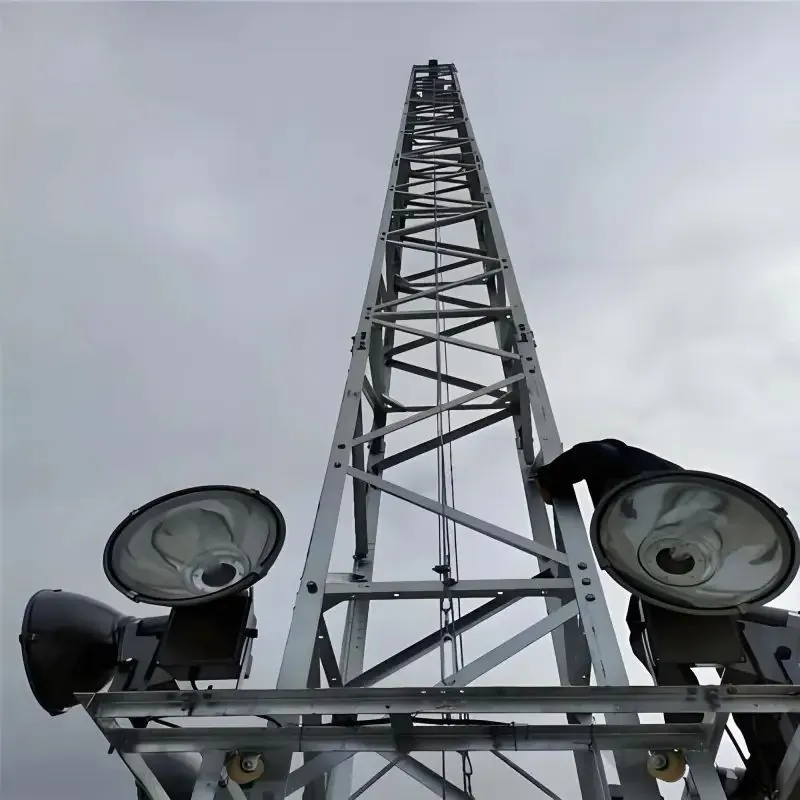
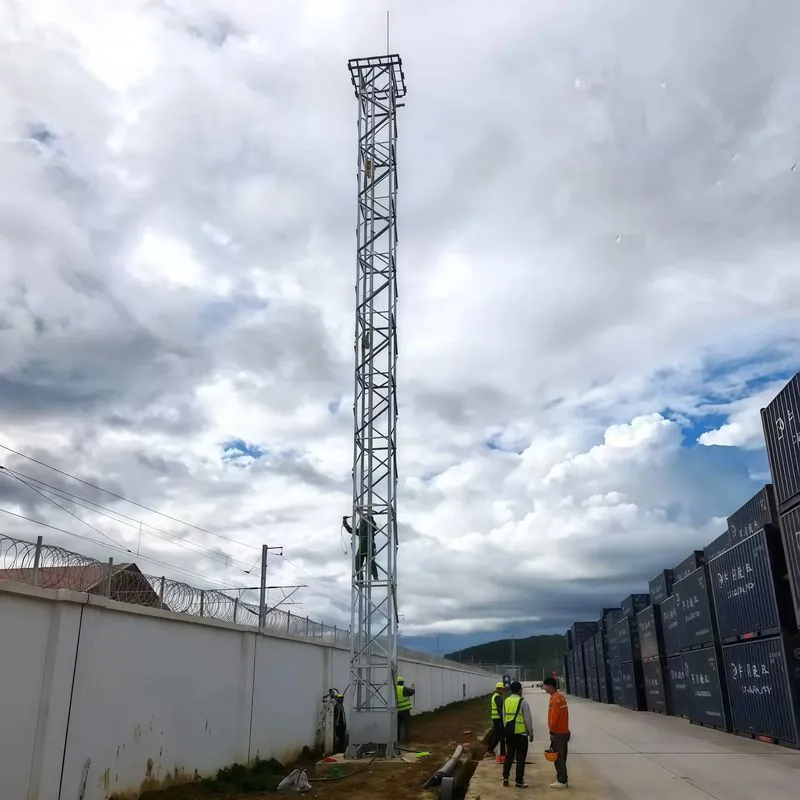
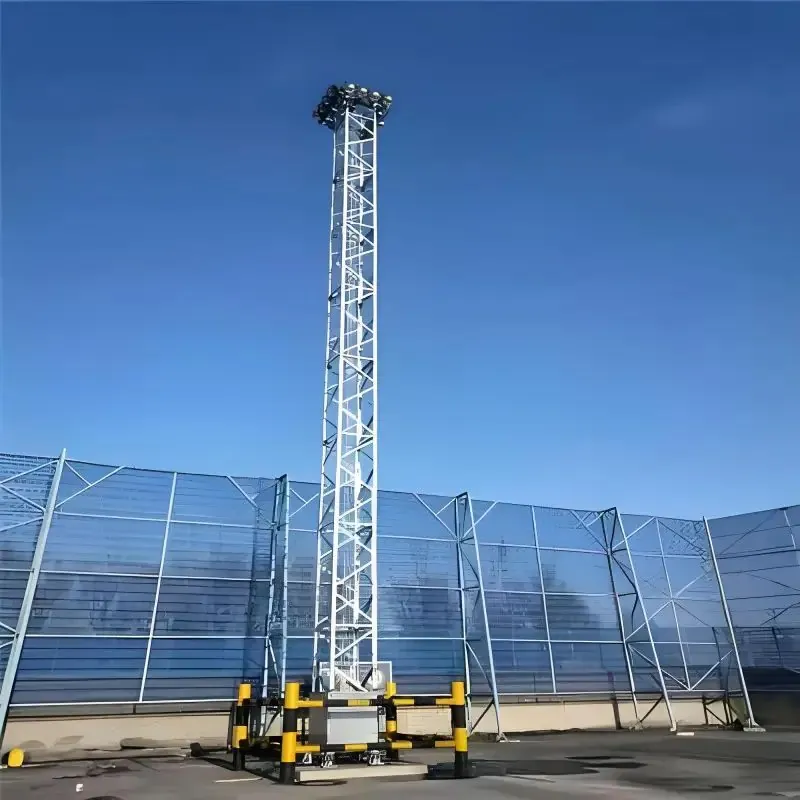
This lowering floodlight tower is made for railway yards and other sites where a large area must be lit from a limited number of positions. It can be supplied with a manual or electric lifting system. Typical projects include new and existing railway stations, marshalling yards, ports, logistics areas, industrial sites, and large parking facilities.
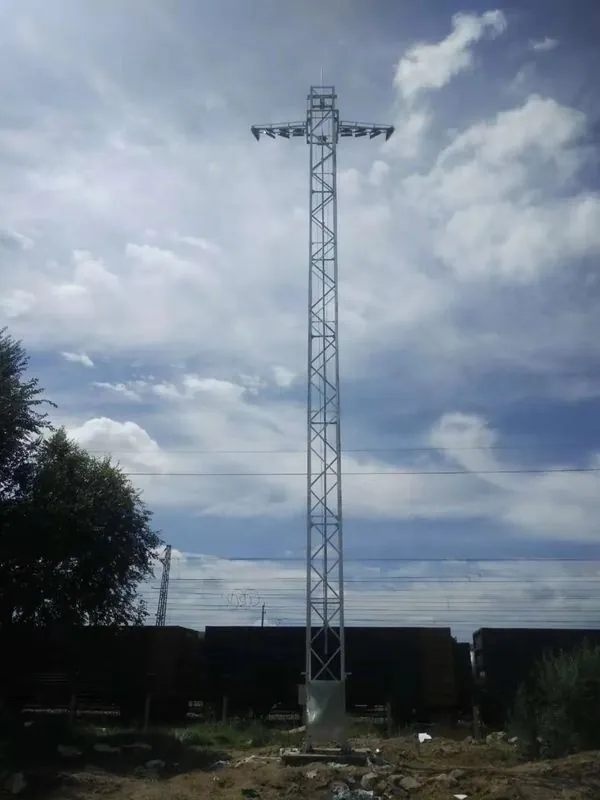
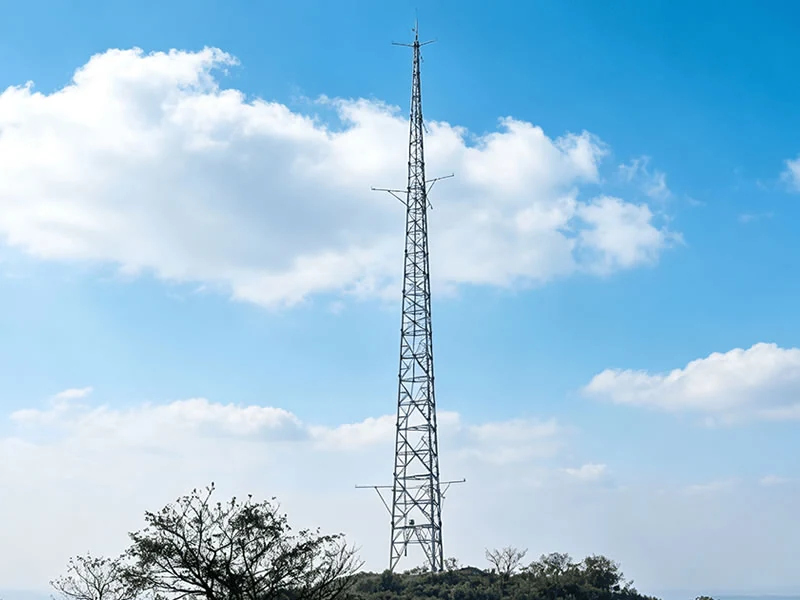
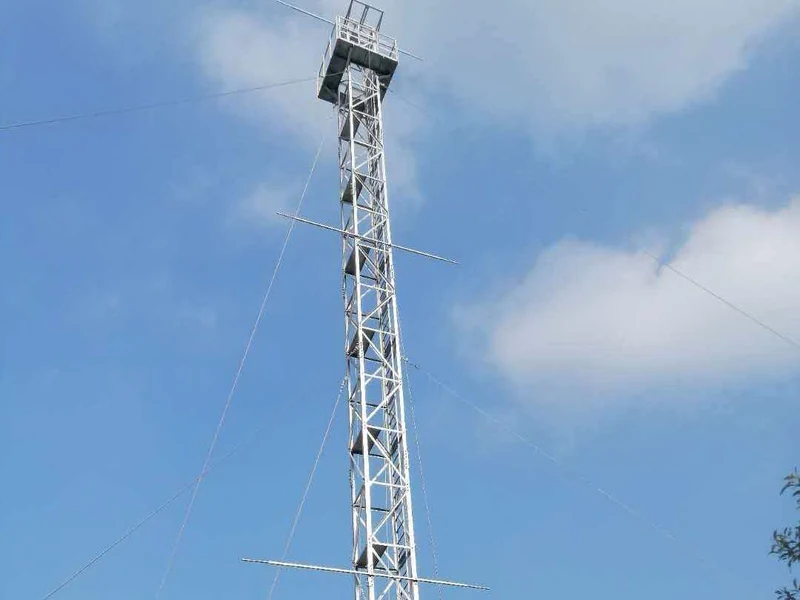
The lattice tower body is built from equal angle steel in square sections. All tower sections are bolted, which keeps the shipping units manageable and makes site assembly straightforward. Standard square sections are available in 0.6 m, 0.9 m, and 1.0 m series, with tower heights from 16.5 to 40 m. The steelwork and small components are hot-dip galvanized after fabrication.
The standard series can be designed for sites with a basic wind pressure below 0.75 kPa. Snow, ice, and seismic requirements must be stated before quotation so the tower, foundation loads, and fittings can be checked for the actual location.
Lifting, rotation, and control
- Lamp carriage: a welded angle-steel frame with positioning devices and eight guide rollers. Square, round, polygonal, and straight-bar layouts are available.
- Lifting system: manual or electric operation using a winch, gearbox, pulley box, clutch, support frame, and counterweight. The lamp carriage runs steadily along the tower for maintenance at ground level.
- Rotating type: on railway projects, the lamp bar can remain parallel to the track during lifting and then be turned 90 degrees at the top.
- Electrical system: the tower can include a distribution box, wiring conduit, grounding connection, and lightning rod. Control options include local, remote, photocell, timer, half-night, and all-night operation.
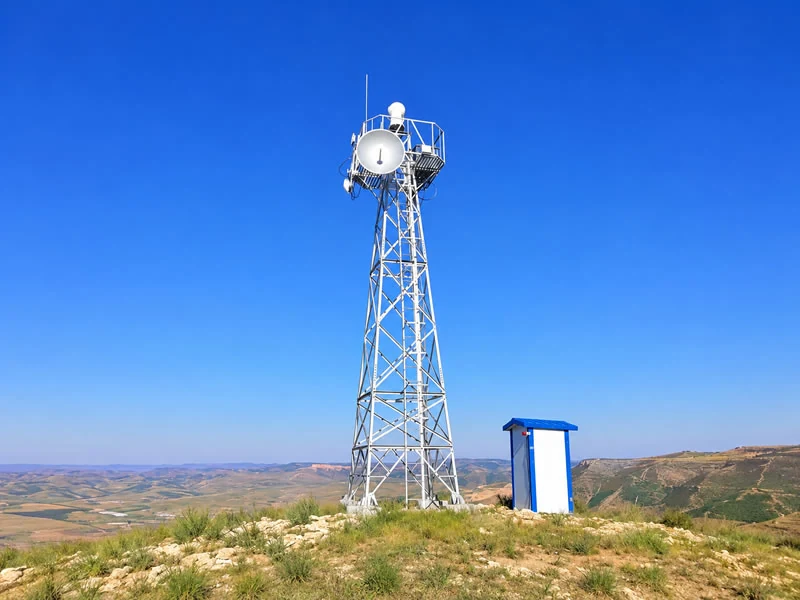
- Additional functions: the modular tower can also carry selected antennas, cameras, or lightning protection equipment when the structure is designed for the extra load.
Specifications
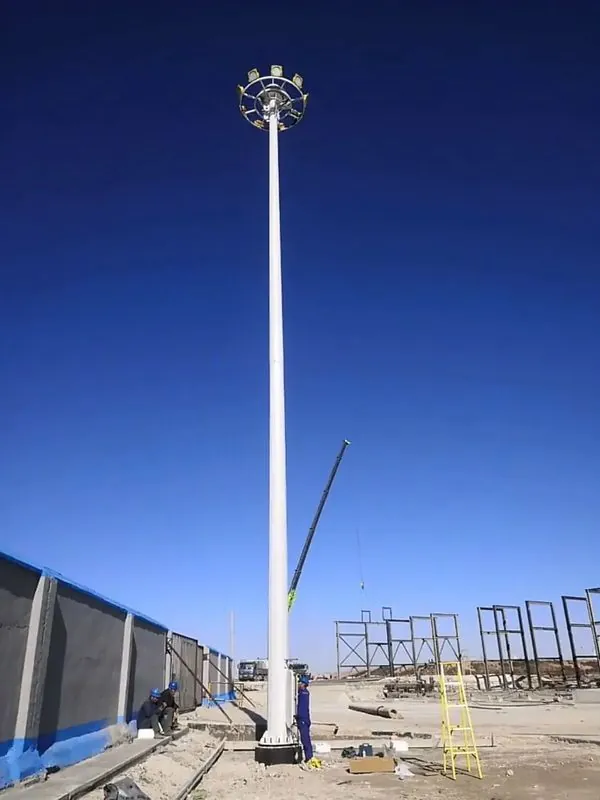
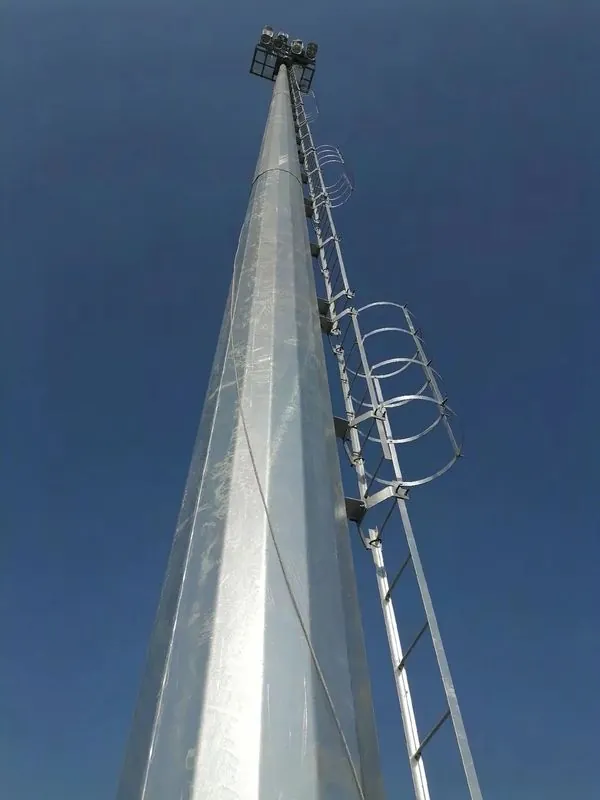
| Structure | Tapered monopole, polygonal pole, or lattice tower |
| Standard heights | 16.5 to 40 m for modular lattice towers; project-specific heights available |
| Steel grade | Q235B or Q355B structural steel |
| Lattice section | Square section in 0.6 m, 0.9 m, or 1.0 m series; bolted angle-steel construction |
| Lifting system | Manual winch or electric winch lowering system |
| Lamp frame | Round, polygonal, double-level, or fan-shaped |
| Number of fixtures | 4 to 36, selected for tower height and lighting requirement |
| Light source | LED, high-pressure sodium, or metal halide floodlight |
| Fixture power | 100 W to 2000 W per fixture |
| Power supply | Typical 380 V three-phase four-wire supply; project voltage and frequency to be confirmed |
| Design condition | Standard series for basic wind pressure below 0.75 kPa; site-specific calculation required |
| Seismic design | Up to intensity 8 when specified |
| Grounding | Lightning rod and tower grounding provision; grounding resistance not greater than 10 ohms when installed as specified |
| Lighting control | Local, remote, photocell, timer, half-night, or all-night control |
| Fixture protection | IP65 |
| Surface treatment | Hot-dip galvanizing with outdoor powder coating or fluorocarbon coating |
| Design service life | Typically 25 to 50 years, subject to design, site exposure, and maintenance |
Final tower dimensions, foundation design, wind loading, lighting layout, and electrical configuration are confirmed for each project.
Applications
High mast systems are used for ports, logistics yards, stadiums, parking areas, highway service areas, industrial parks, railway yards, airports, and other sites that need broad outdoor lighting.

 English
 German
 French
 Portuguese
 Spanish
 Russian
 Arabic
 Indonesian
 Vietnamese