

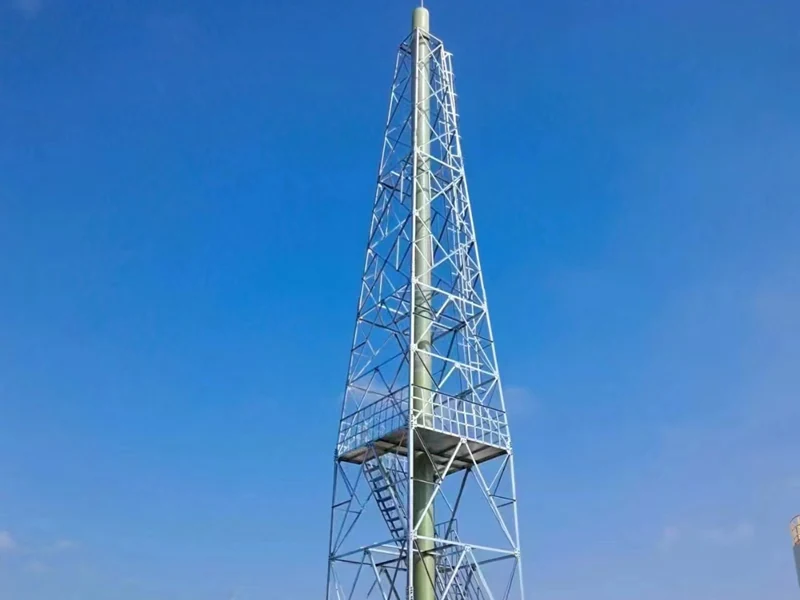
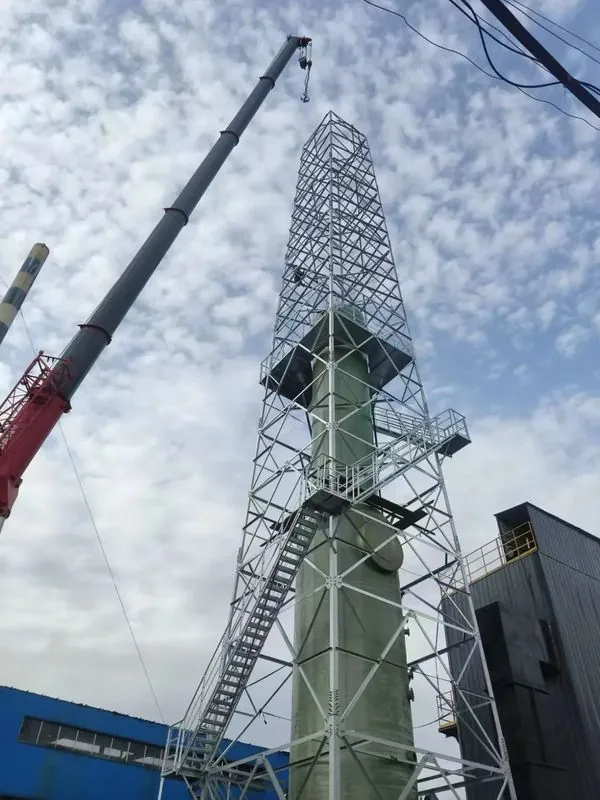
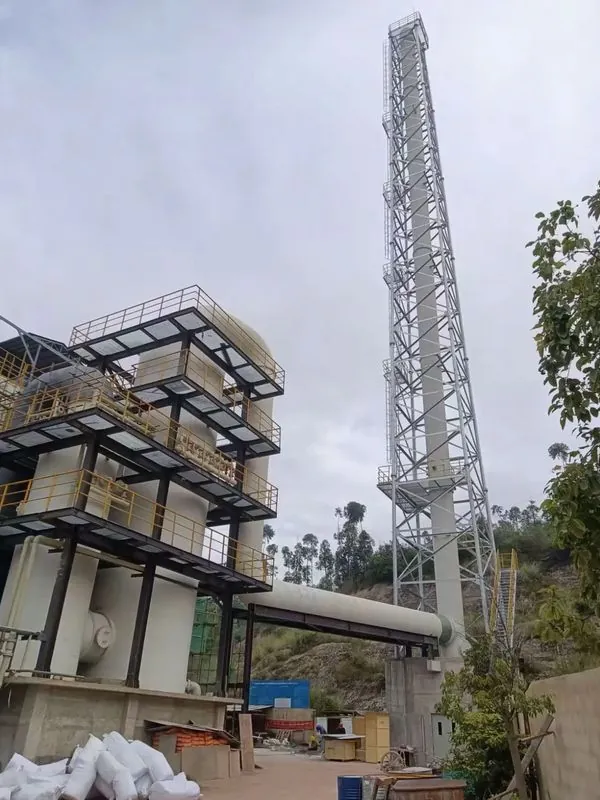
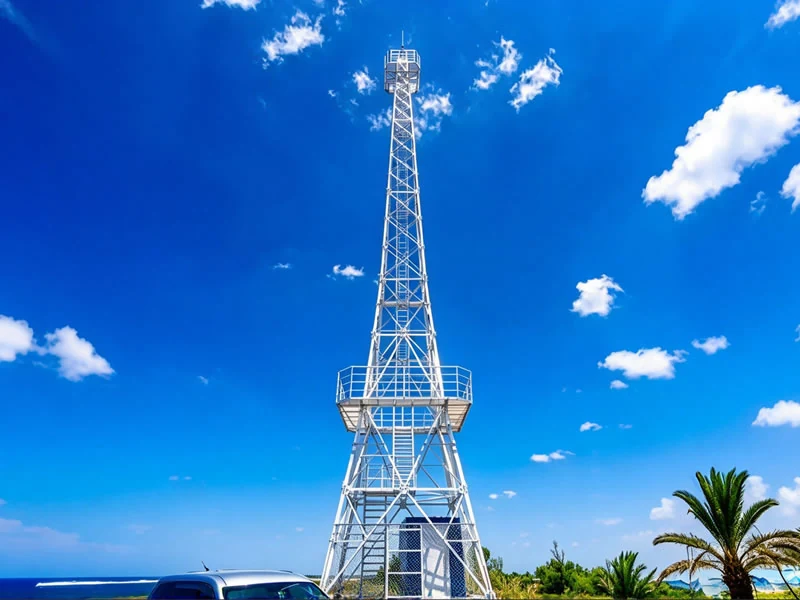
FRP flues and thin-walled metal stacks often need a separate frame to take the wind load and carry the access platforms. That is the job of a chimney support tower. We make these towers for desulfurization units, boiler exhausts and other industrial stacks.
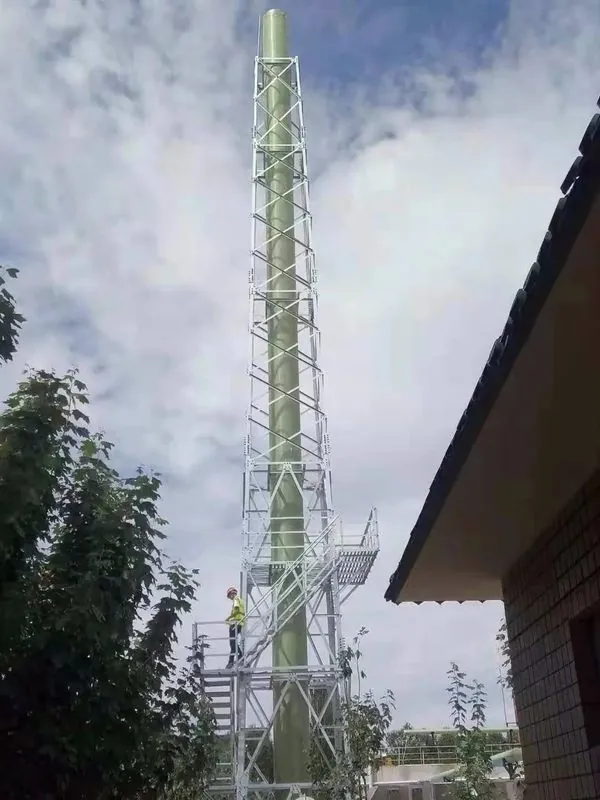
One tower may carry a single chimney or several flues. The stack is held by ring beams and guides at the levels shown in the structural design. These supports keep the flue in position but can be detailed to allow the movement caused by temperature changes.
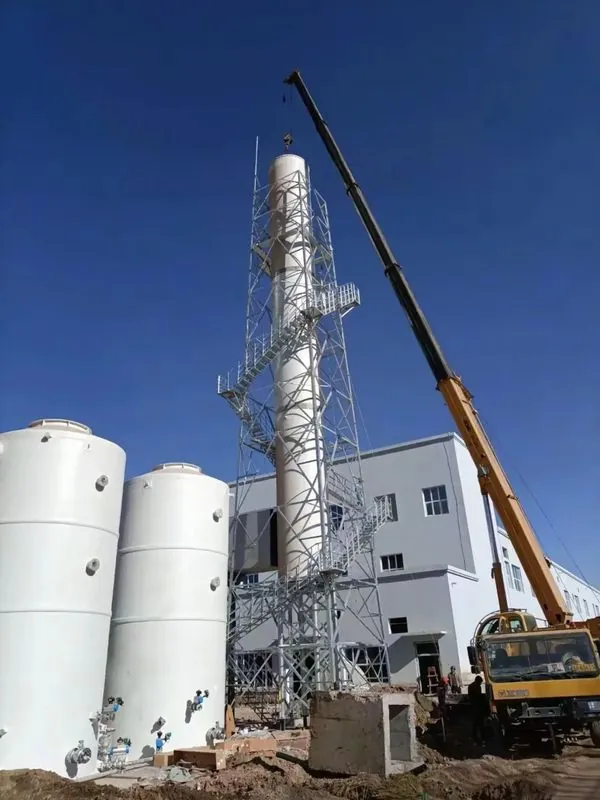
The main frame is normally made from Q235B or Q355B angle steel or tube. We divide it into bolted sections that can be loaded for transport and assembled with a crane on site. The finished steelwork is usually hot-dip galvanized. An additional paint system can be applied for chemical plants or coastal locations.
Platforms and access
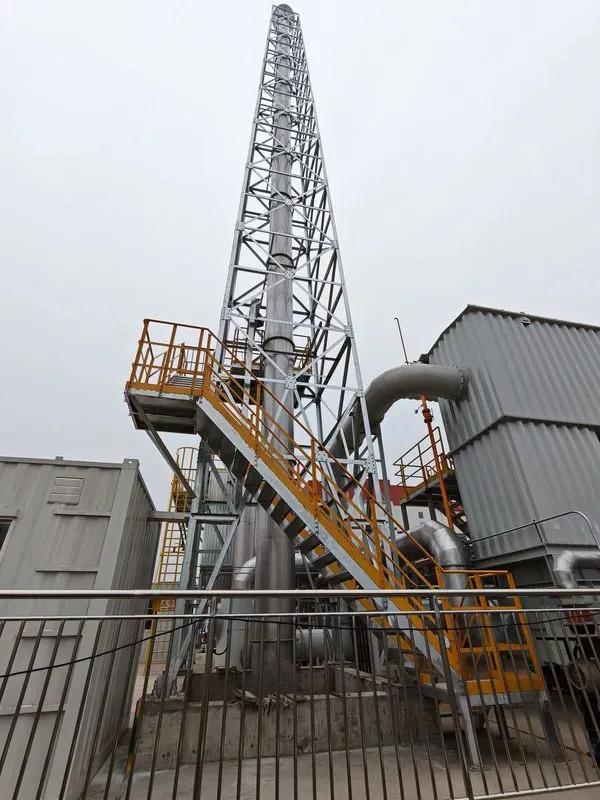
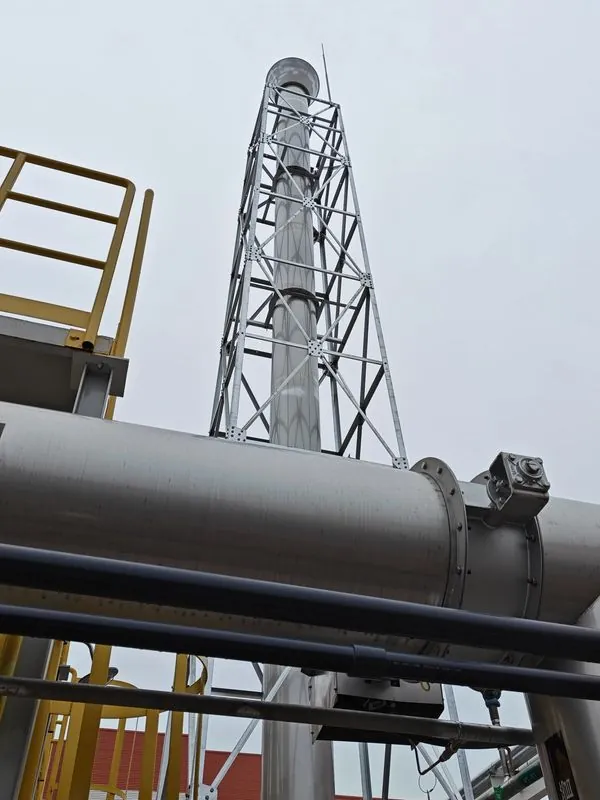
The platform levels should match the actual inspection doors, sampling points and monitoring instruments. They are not added at fixed intervals simply to fill the tower. Depending on the plant layout, access can be by a caged ladder or an inclined stairway. We check the position of duct elbows, nearby equipment and the crane working area before the fabrication drawings are released.
Specifications
| Structural arrangement | Self-supporting, guyed, sleeve, or multi-flue tower |
| Height range | Self-supporting 15 to 80 m; guyed systems 30 to 150 m; custom design available |
| Stack diameter | 500 to 6000 mm, selected from gas volume and process design |
| Tower steel | Q235B or Q355B angle steel or structural tube |
| Flue material | FRP, 304/316L stainless steel, carbon steel, or titanium-clad steel |
| Design wind pressure | 0.4 to 0.8 kN/m², checked for the project location |
| Seismic design | Up to intensity 8 when specified |
| Operating temperature | FRP up to 100°C; stainless steel up to 400°C; carbon steel up to 300°C |
| Gas velocity | Typically 10 to 30 m/s, confirmed by process design |
| Material thickness | Tower members 6 to 16 mm; flue wall 3 to 20 mm, subject to calculation |
| Access platforms | One to three service levels with ladder, safety cage or inclined stairs |
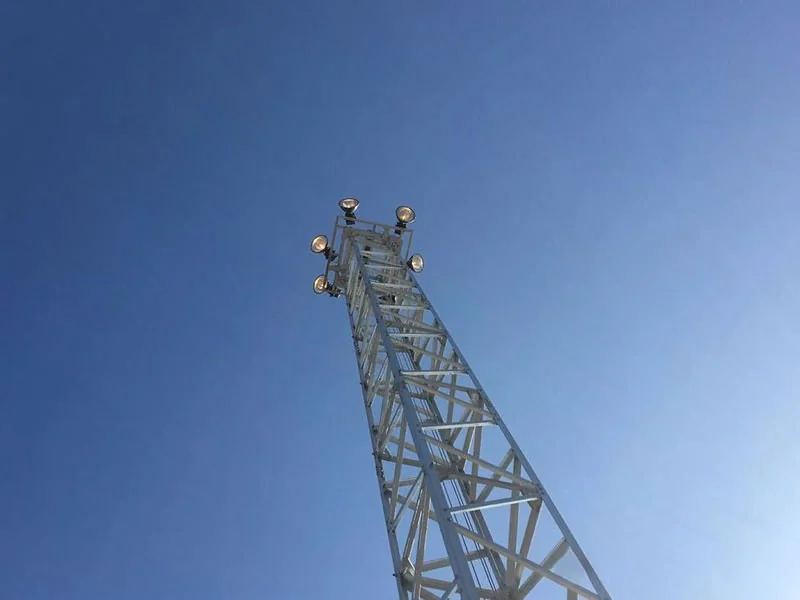
| Aviation lights | Top and intermediate levels when required by tower height and local rules |
| Corrosion protection | Hot-dip galvanizing with an optional plant-grade protective coating |
| Reference standards | GB 50051 and GB 50017; other project standards can be reviewed |
| Design service life | 50 years when specified design, coating and maintenance conditions are met |
When asking for a quotation, send us the stack height and diameter, flue material, working temperature and a general arrangement drawing if one is available. We will also need the project location or the specified wind and seismic loads.
Applications
- Flue gas desulfurization (FGD) systems in power plants
- Chemical plants and steel mills
- Waste incineration plants
- Industrial boiler flue gas exhaust
- Stand-alone chimney for process exhaust

 English
 German
 French
 Portuguese
 Spanish
 Russian
 Arabic
 Indonesian
 Vietnamese