

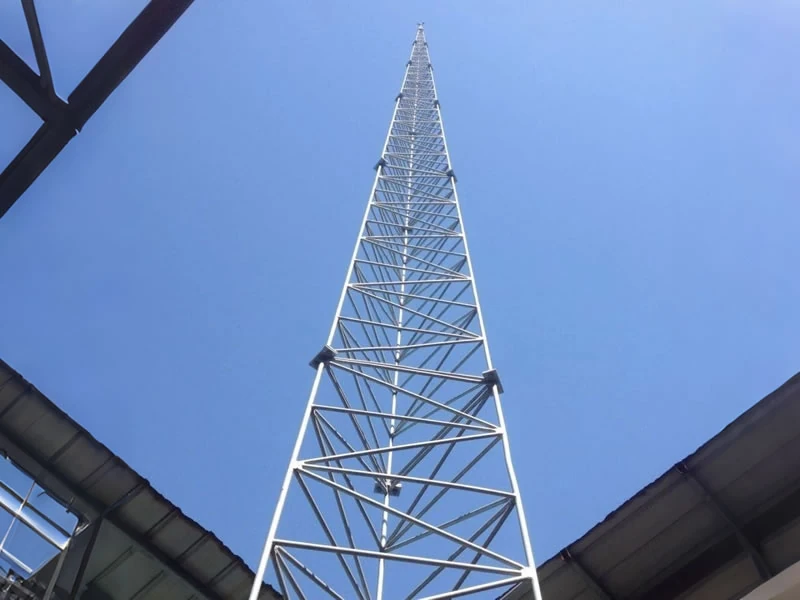
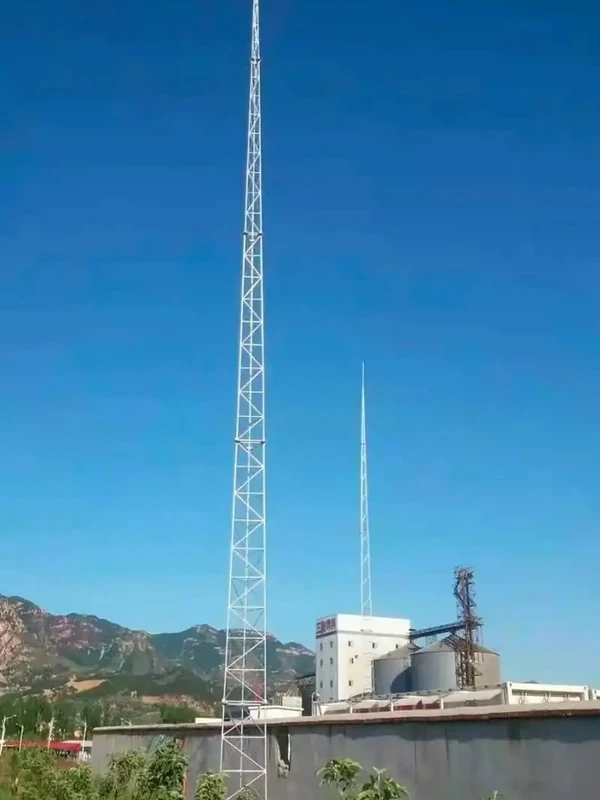
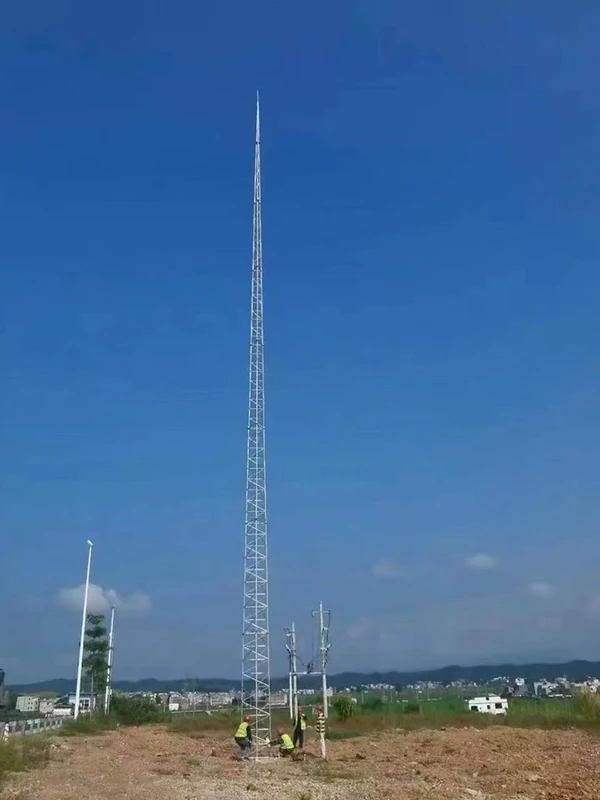
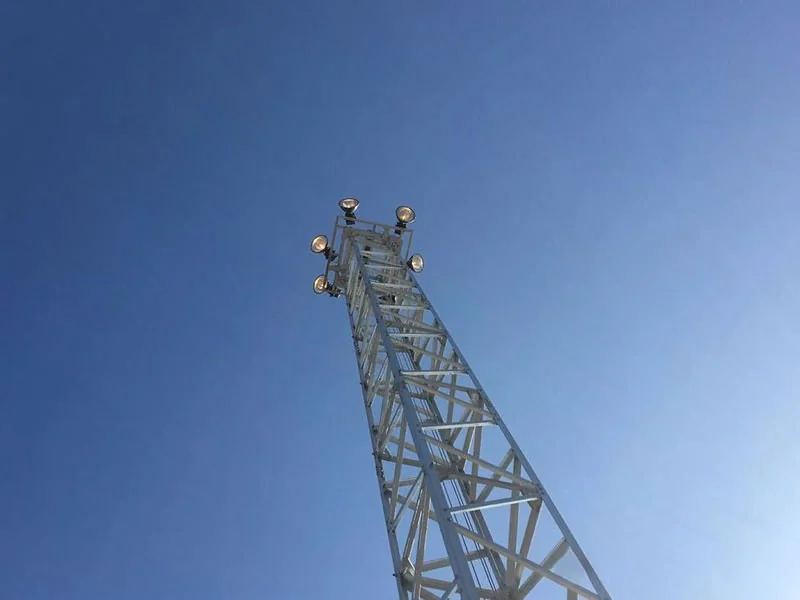
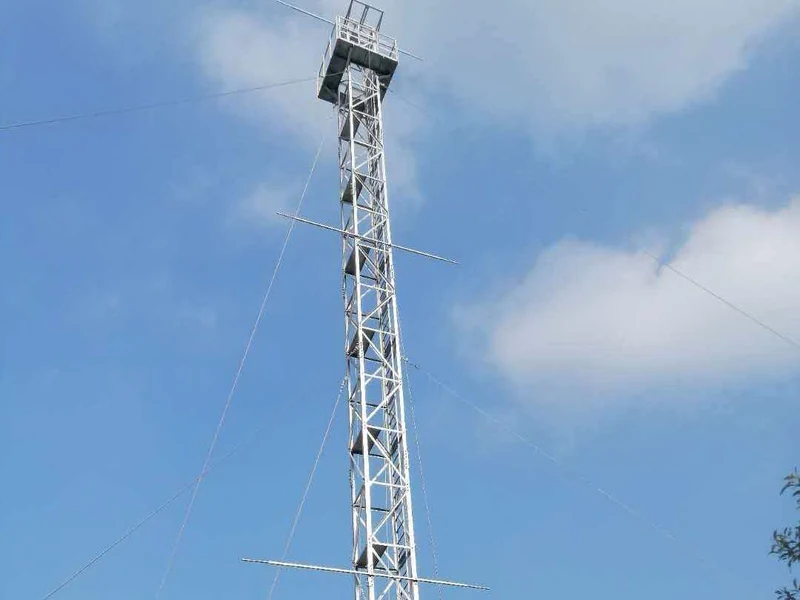
Tubular Lattice Lightning Protection Tower is often marked as GJT on Chinese project drawings. For export orders, we quote from the required height, steel grade, wind data and design standard, so the local model code is not essential. Towers between 10 and 30 m are common at telecom compounds and small plants. Substations, tank farms and larger industrial sites often need a taller structure after the protection layout has been checked.
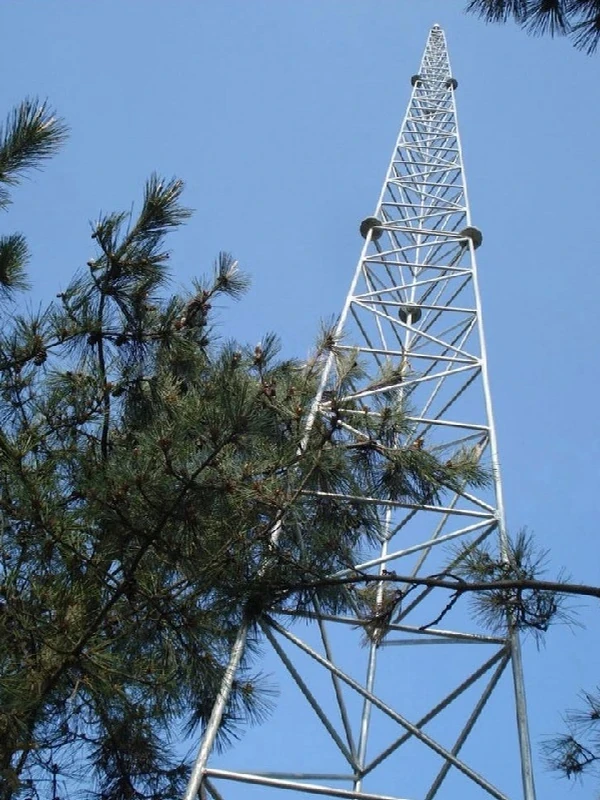
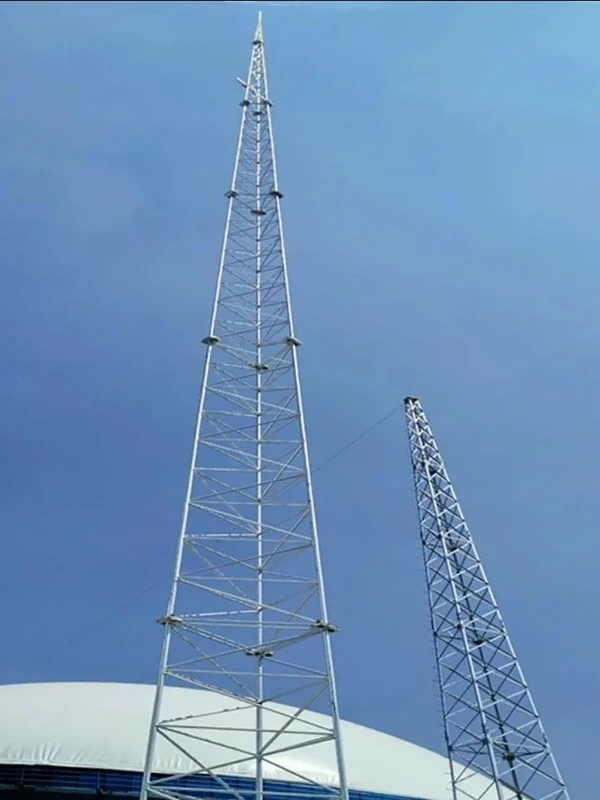
The three main legs form an equilateral triangle. Cross members and diagonal braces make the frame self-supporting, leaving roads and maintenance areas free of guy anchors. To select a height, we need the tower position and the maximum height of the equipment or building to be protected. The project lightning study then sets the number and position of the air terminals.
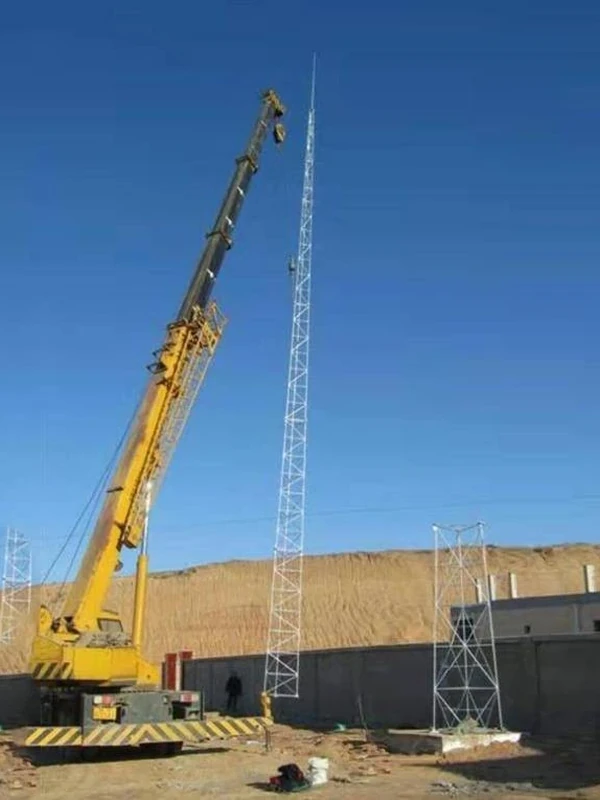
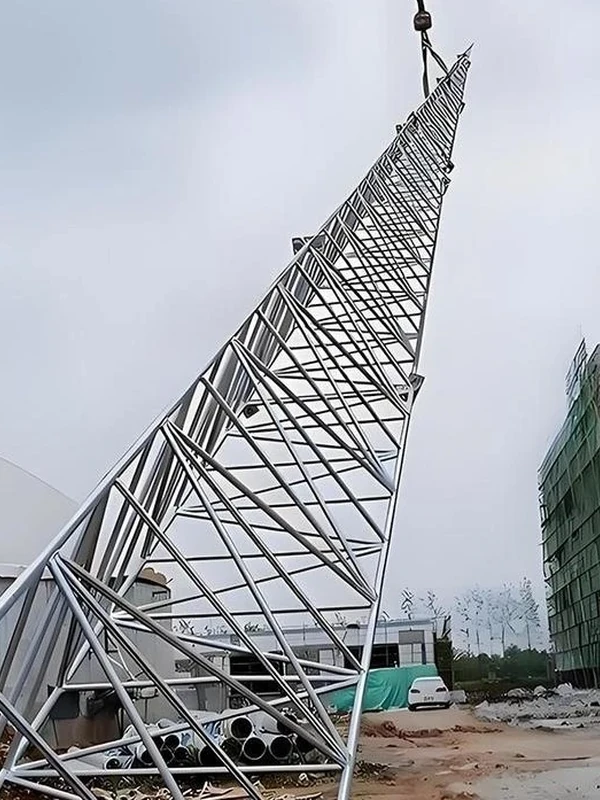
The tower is supplied in transportable sections. Bracing is welded in the factory, and the sections are joined on site with bolted flanges, so normal erection does not require field welding. The completed steelwork is hot-dip galvanized. Coastal and chemical sites can specify a duplex coating if the exposure assessment calls for it. Each leg normally has its own reinforced concrete footing.
Specifications
| Structure | Self-supporting three-leg tubular lattice tower |
| Height range | 10 to 60 m; 10 to 30 m is common for telecom and small industrial sites |
| Main legs | Q235B, Q355B or an approved equivalent circular hollow section (CHS), sized by calculation |
| Cross-section | Equilateral triangular arrangement |
| Connections | Shop-welded bracing with bolted flanged joints between tower sections; bolt grade to the structural design |
| Air termination | One or more air terminals, positioned to the project lightning protection design |
| Protection layout | Rolling sphere, protective angle or another method required by the project standard |
| Design wind speed | Specified from the project location and applicable structural code |
| Corrosion protection | Hot-dip galvanizing to ISO 1461, GB/T 13912 or the specified local standard; duplex coating available |
| Foundation | Normally three reinforced concrete pad footings; final design based on soil data |
| Reference standards | IEC 62305-3:2024 when specified; structural design to the agreed national or project code. GB 50057 applies to China projects |
For a quotation, send the general arrangement drawing, required tower height, protected-object height, site wind data and available soil information. On telecom sites, mark the antenna positions. The electrical designer should also state the required separation distance and grounding criteria.
Applications
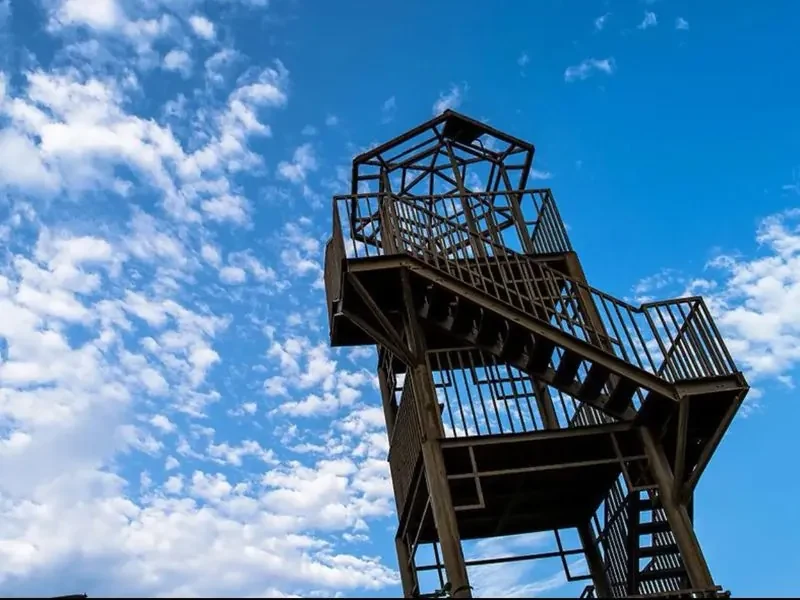
Typical projects include telecom base stations, radar sites, substations, power plants, fuel and LPG storage, chemical plants, pump stations and factory compounds. The tower can also be supplied for forest monitoring sites, municipal facilities and visitor areas where a freestanding lightning mast is required. Its height and air-terminal layout are taken from the project lightning study.

 English
 German
 French
 Portuguese
 Spanish
 Russian
 Arabic
 Indonesian
 Vietnamese